How to Build a Backyard Bird Feeding Station
This guide contains affiliate links, which means The Gathered Guide may earn a small commission if you make a purchase – at no additional cost to you.
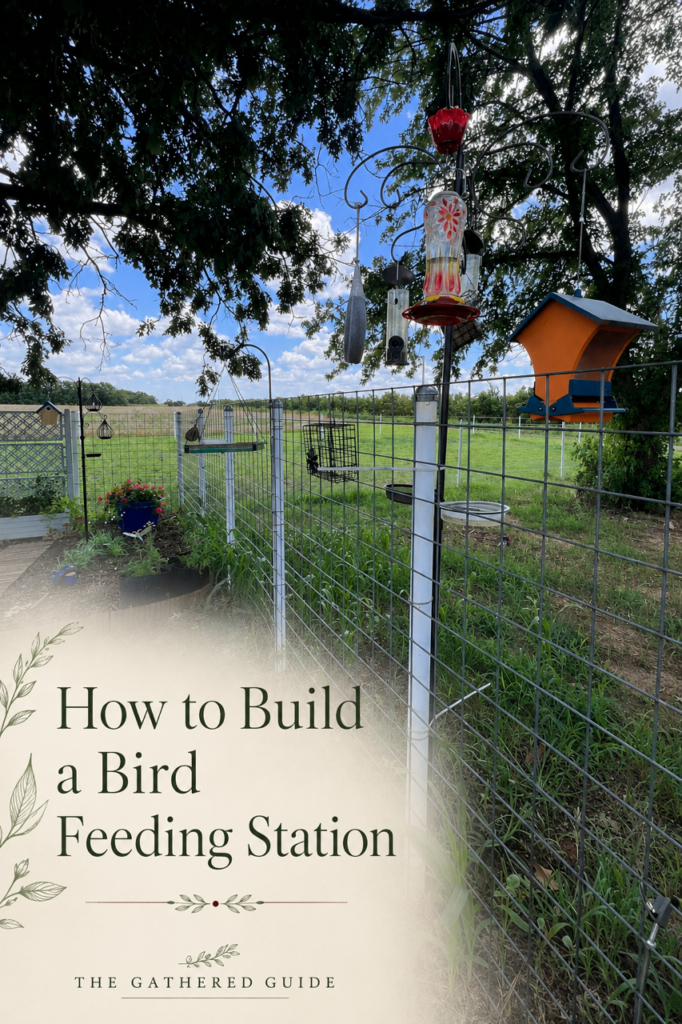
A bird feeding station creates one welcoming place where backyard birds can find food, water, and a safe place to pause. Instead of hanging a single feeder wherever there happens to be room, a thoughtfully arranged station brings several bird-friendly elements together in one convenient area.
The result does not need to be elaborate. With a sturdy feeder pole, a few different feeding options, fresh water, and nearby natural cover, even a small corner of the yard can become a lively gathering place for local birds.
Choose the Right Location
Begin with a spot that is easy for you to see and maintain. A location visible from a kitchen window, porch, patio, or favorite chair makes it easier to enjoy the birds throughout the day.
Birds also appreciate nearby trees, shrubs, or fencing where they can wait, watch, and retreat if they feel threatened. Try not to place the station directly in the middle of a wide-open yard with nowhere for birds to take cover.
Choose an area you can reach comfortably for refilling feeders, replacing water, and cleaning up spilled seed. A practical location will make the station much easier to maintain over time.
Create a Sturdy Base
A bird feeder pole with multiple hooks serves as the center of the station. It allows you to hang several types of feeders together without needing multiple trees, shepherd’s hooks, or separate mounting areas.
Before adding feeders, make sure the pole is firmly secured and able to remain stable during wind or rain. Arrange the hooks so the feeders have enough room to hang freely without knocking into one another.
Keeping several feeders together also makes refilling and cleaning more convenient.
Add a Squirrel Baffle
Squirrels are clever, persistent, and very interested in birdseed. A squirrel baffle placed on the feeder pole helps prevent them from climbing directly up to the feeders.
For the baffle to work well, the pole should be positioned away from tree branches, fences, roofs, and other places squirrels could use as launching points. They can jump farther than you might expect.
A baffle will not solve every squirrel problem, but it can greatly reduce how much seed disappears before the birds have a chance to enjoy it.
Offer More Than One Feeding Style
Different birds prefer different ways of feeding, so including more than one feeder can attract a wider variety of visitors.
A hanging tube bird feeder securely holds seed while offering small feeding ports for finches, chickadees, sparrows, and other smaller birds. Its enclosed design also helps protect much of the seed from wind and light rain.
A platform bird feeder provides a broad, open space for birds that may not feel comfortable balancing on a narrow perch. Cardinals, doves, jays, and other larger backyard birds often appreciate having room to land and feed.
Position the feeders where you can clearly see them without making the station feel crowded.
Choose a Versatile Seed Blend
A quality wild bird seed blend is an easy place to begin when you want to welcome several different species. Look for a blend containing seeds that appeal to birds commonly seen in your area.
Pay attention to which ingredients disappear first and which are repeatedly left behind. Over time, the birds visiting your yard will show you what they prefer. You can then adjust the food you offer or add a more specialized feeder as your station grows.
Store extra seed in a dry, secure container to help keep it fresh and discourage pests.
Do Not Forget Fresh Water
Food may bring birds into the yard, but water can make the station even more inviting. A pedestal bird bath gives birds a place to drink, bathe, and cool themselves during warm weather.
Place the bird bath near the feeding area while leaving enough room for birds to approach it comfortably. Replace the water regularly and rinse the basin whenever it begins to collect seed, leaves, or debris.
Keep the Station Clean and Welcoming
Check the feeders often for damp or spoiled seed, and clean them regularly to prevent buildup. Sweep or rake away excessive seed hulls beneath the station, especially after wet weather.
A good bird feeding station does not have to be perfect. Begin with the essentials, notice which birds arrive, and allow the space to evolve. Before long, your feeding station may become one of the most active and enjoyable corners of the yard.
Shop the Guide…
Everything featured in this guide is organized in one Amazon collection so you can easily create the perfect bird feeding station and start watching the birds.